What is it?
Popularized by Uniswap V3, concentrated liquidity enables liquidity providers to focus their capital within specific ranges, tightening spreads and reducing slippage while that liquidity is active.
To understand concentrated liquidity, compare it with a familiar centralized-market structure: an order book.
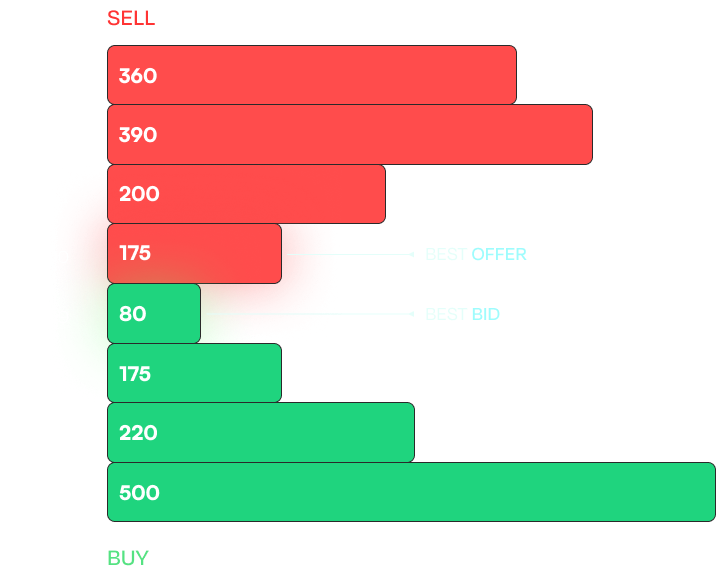
In the depth chart above, bids (buys) and asks (sells) are clearly shown. The available depth shows how a market order would move through quoted prices and affect its average execution price.
Ramses CL
Ramses CL is a concentrated-liquidity AMM designed for capital-efficient liquidity provision. Its price-level depth can resemble an order book, while swaps continue to execute through onchain liquidity.
In a Uniswap v2 liquidity pair, liquidity positions are spread across a range from 0 to infinity (0,∞). Each liquidity provider therefore distributes capital across the full positive price range.
Full-range liquidity can be far less capital-efficient near the current market price than liquidity concentrated within a defined range such as $3400-$3500. Focusing liquidity around active prices creates more depth per dollar and can reduce price impact while that liquidity remains in range.
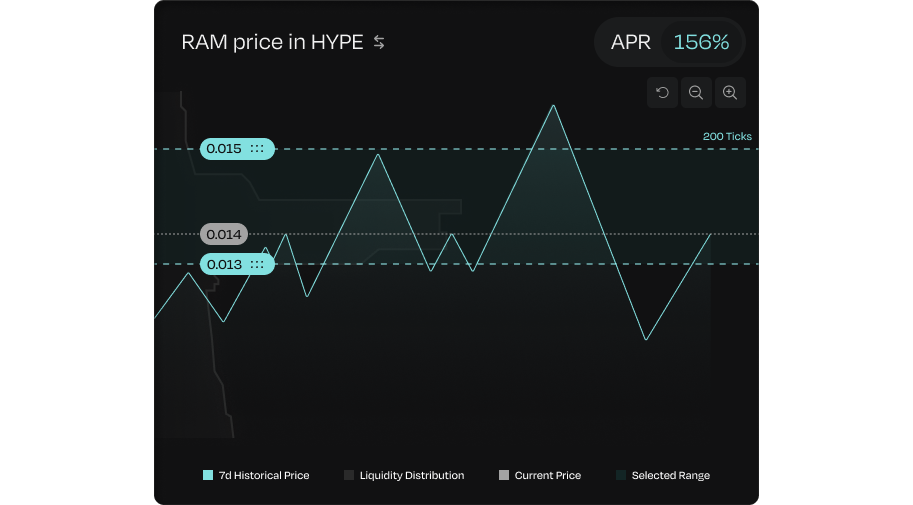
The price-history overlay shows the pool's recent trading range, helping liquidity providers assess volatility before selecting a position range.
The liquidity-depth view shows how capital is distributed across initialized prices for the selected fee tier.
The horizontal markers represent the range of the position. In the context of automated market makers (AMMs), a "range" is an interval between two usable ticks. The marker also displays the number of ticks within the range.
Order Book View
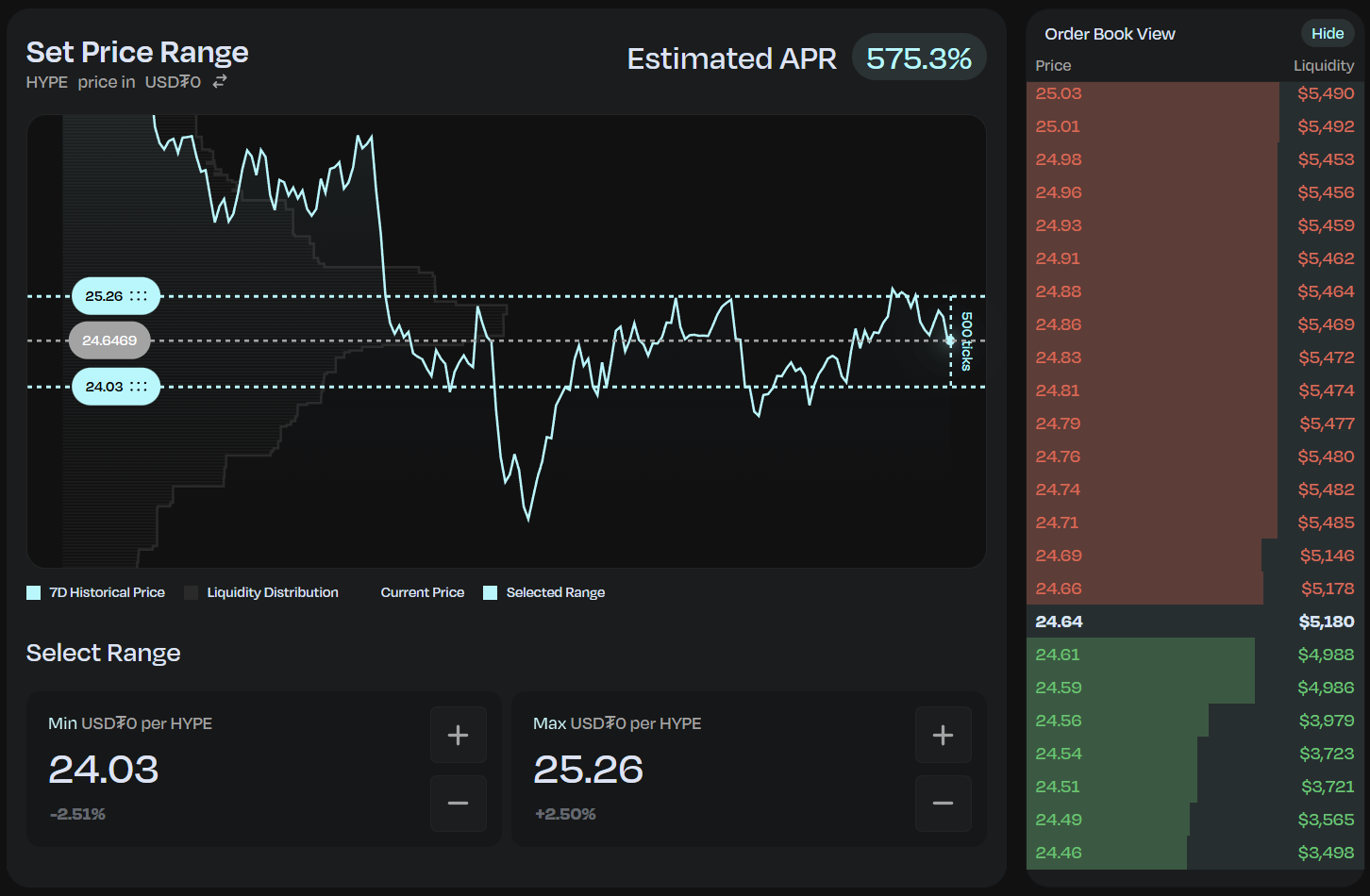
The order book view presents concentrated-liquidity positions in a familiar format. It helps users compare available ranges and manage positions using a price-level layout.
Alice and Bob
Consider Alice and Bob providing liquidity to a HYPE / USD₮0 pool with HYPE at $50. Each has $1,000,000 available, but they take different approaches:
| Alice's AMM Strategy | Bob's CL Strategy |
|---|---|
| Spreads her entire $1,000,000 across the full price range in a passive full-range position. | Allocates about $49,000 within the $45-$55 price range and keeps about $951,000 for other opportunities. |
| Provides full-range liquidity at every positive price. | Provides approximately the same liquidity depth as Alice while HYPE remains between $45 and $55, using less deposited capital. |
| Remains active across the full price curve. | Becomes inactive and entirely one-sided after price moves beyond a range boundary, until price re-enters the range or Bob adjusts the position. |
Concentrated liquidity can provide more depth per dollar while a position is active. Fees and rewards depend on volume, active-liquidity share, time in range, and gauge eligibility. An out-of-range position stops earning swap fees and becomes entirely one-sided until price returns or the LP adjusts it.
Competitive Farming
Competitive farming rewards liquidity that is active and eligible for a pool's gauge. In concentrated liquidity models, users choose the tick-aligned price interval in which they want to provide liquidity.
What are the benefits?
Active, gauge-eligible liquidity can earn RAM emissions according to xRAM votes. Productive liquidity also improves execution and can help a pool become a preferred routing destination for aggregators.
Trading volume generates swap fees. Under the default Ramses configuration, gauged pools direct those fees to xRAM voters, while RAM emissions paid to eligible LPs depend on gauge votes.
How does this differ from other models?
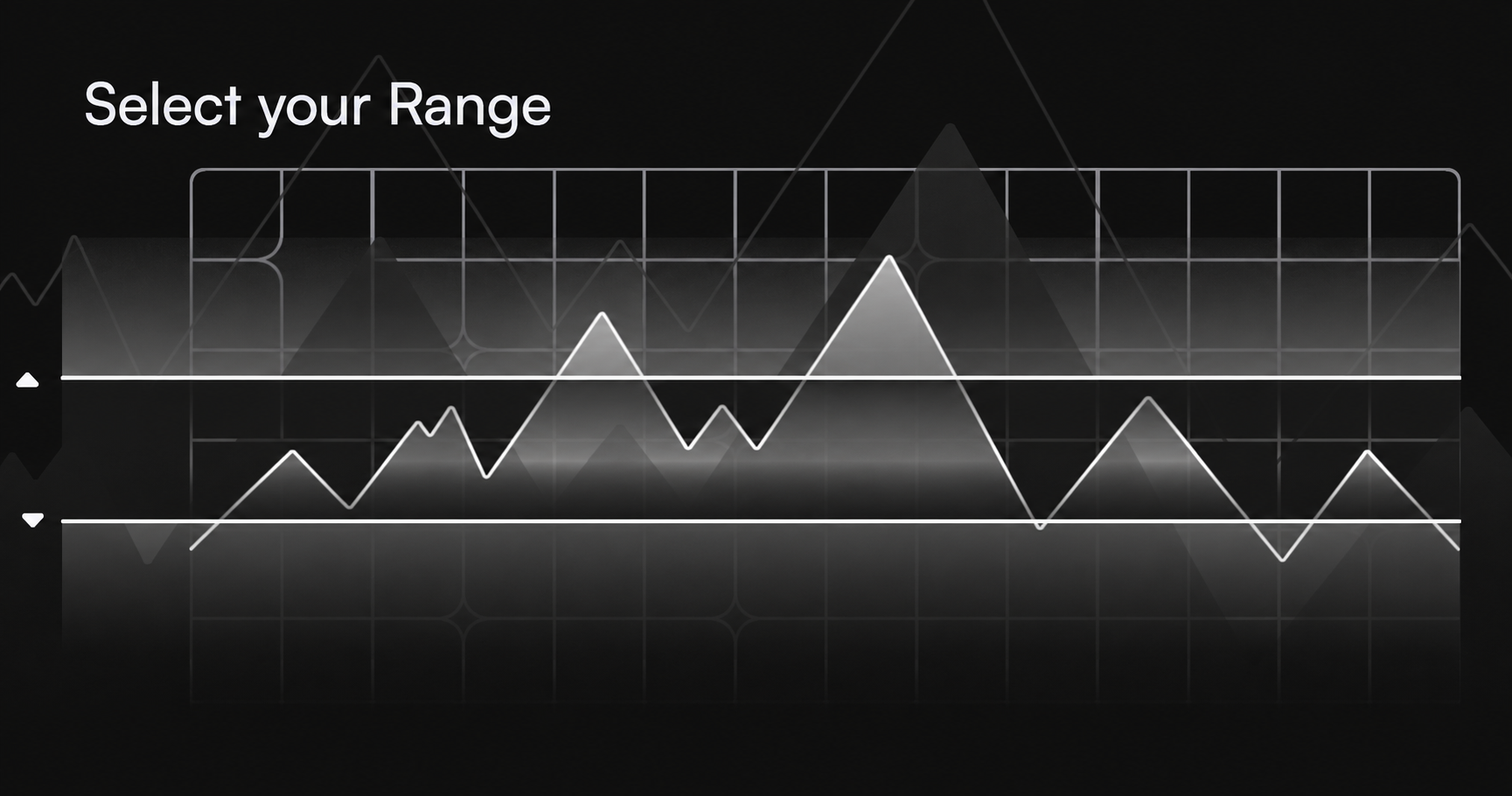
Unlike full-range positions, concentrated liquidity lets LPs choose where their capital is active. Narrower ranges create more depth per dollar and require closer management as the market price moves.
Range Orders
In order books, a trader can place a limit order to buy or sell an asset at a specified price. Concentrated-liquidity range orders approximate that behavior but have different execution and inventory mechanics.
With concentrated liquidity, you can approximate a limit order by providing a single asset as liquidity within a specific range. Like traditional limit orders, range orders are set with the expectation they will execute at some point in the future, with the target asset available for withdrawal after the spot price has crossed the full range of the order.
Take-Profit Order
Selling HYPE for USD₮0
The current price of the HYPE / USD₮0 pool is $40. To begin selling HYPE when price reaches approximately $45, you can provide HYPE in a range such as $45-$46. The position converts HYPE into USD₮0 as price moves through the range and is fully converted only after price crosses the upper boundary. Execution occurs across the range, not at one exact price.
Buy Limit Order
Selling USD₮0 for HYPE
The current price of the HYPE / USD₮0 pool is $45. To begin buying HYPE if price falls to approximately $42, you can provide USD₮0 in a range such as $41-$42. The position begins converting below the upper boundary and is fully converted only after price crosses the lower boundary.
Range-Order Limits
CL range orders convert inventory only as price moves through the selected range. Stop orders on the opposite side of the current market require a different order type. Choose the execution interval carefully: wider ranges execute across more prices, while narrower ranges concentrate more liquidity per dollar.
Fee Tiers
Ramses supports the following core fee tiers. Robinhood Chain also supports 3% and 5% tiers for higher-volatility markets. The app shows the tiers available on the selected chain.
| Fee Tier | Tick Spacing | Best Used For |
|---|---|---|
| 0.01% | 1 | Highly correlated and pegged assets |
| 0.025% | 5 | Competitive asset classes with moderate volatility |
| 0.05% | 10 | Standard fee tier for most trading pools |
| 0.3% | 50 | Higher volatility assets |
| 1% | 100 | Exotic pairs with significant volatility |
| 2% | 200 | Highly volatile or illiquid assets |
| 3% (Robinhood Chain) | 300 | Higher-volatility markets |
| 5% (Robinhood Chain) | 500 | Extreme-volatility or thin-liquidity markets |
Distribution
By default, swap fees are distributed according to the pool's gauge state:
| Pool State | Liquidity Providers | xRAM Voters | Protocol |
|---|---|---|---|
| Gauged | 0% | 100% | 0% |
| Fee-only / Ungauged | 95% | 0% | 5% |